
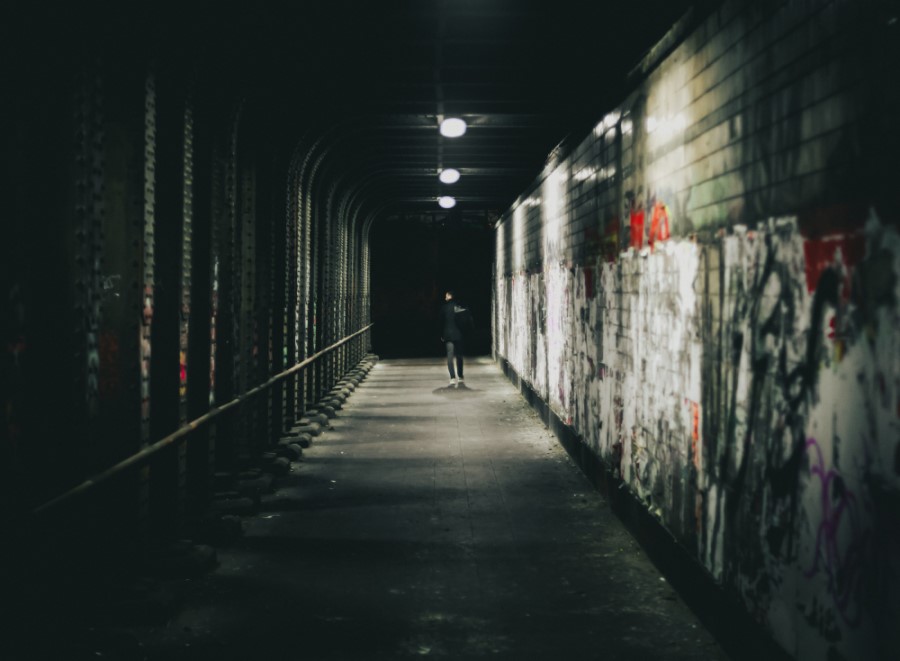
I wanted to talk about something a little more serious today: staying safe in an unsafe world, particularly as a woman and, for those of us who are visibly Muslim, as a Muslim woman.
Unfortunately, racism and Islamophobia haven’t disappeared.
Sometimes it actually feels as though we’re going backwards rather than forwards.
If you wear hijab or other clothing that makes you visibly Muslim, you can’t simply blend into the crowd when anti-Muslim tensions are running high. People know immediately that you’re Muslim, and that can potentially make you a target for someone looking for a vulnerable person to intimidate.
I don’t say that to frighten anyone.
I don’t think we should spend our lives terrified of leaving the house.
But I do think we need to be sensible, aware of what’s happening around us and take reasonable precautions to protect ourselves.
As Muslims, we put our trust in Allah — but we also tie our camel.
So let’s talk about it.
Growing Up With Racism in the UK
I was born and brought up in the UK, originally in Oldham in the North West of England.
Growing up, there was quite a clear divide between predominantly white areas and predominantly Asian areas.
The area where I lived was mainly Asian, and within our own community we generally felt comfortable going outside. But there were other areas where you knew you needed to be more careful.
My secondary school was in one of those areas.
There were plenty of Pakistani and Asian pupils at the school, but outside the school gates was a different story.
I remember one occasion when a family member and I unexpectedly had to use public transport to get home rather than being picked up. We were waiting at a bus stop close to school when the person I was with was attacked by a group of white boys.
Looking back as an adult, it’s actually quite shocking.
Imagine being a child and simply accepting that there are certain streets where you shouldn’t walk because of the colour of your skin.
But that was our reality.
The Casual Racism We Grew Up With
Then there was the casual racism.
Those little comments that people apparently thought were hilarious.
I was quite academic at school — proud nerd then, proud nerd now — so I was often in higher sets where there weren’t many other Asian pupils.
That’s where you sometimes noticed those comments more.
I remember one boy in particular who was openly racist towards us.
One day he was handing textbooks around the classroom and deliberately slammed ours onto the table. We said something back about his weight.
His response?
Essentially: I can change my weight. You can’t change your colour.
I have to admit, for a racist schoolboy, that was quite the comeback.
And he was correct about one thing.
I can’t change the fact that I’m brown.
Nor would I want to.
What was interesting was watching his behaviour change as we got older.
At school, when racism was more openly tolerated within that environment, he was openly racist.
At college, he toned it down.
By university, he didn’t say anything to me at all.
The racism hadn’t necessarily disappeared. What had changed was what he believed he could get away with saying publicly.
That’s something worth remembering.
Racism Can Appear When You Least Expect It
I’ve experienced other incidents as an adult too.
About ten years ago, I was walking through a multicultural area pushing one of my children in a pram.
A man was approaching with a little girl who I assume was his daughter. She politely moved aside to give us space.
He pulled her back and told her she shouldn’t move because they were born here.
I couldn’t help myself.
“I was born here too.”
What else are you supposed to say?
More recently, I was walking across a supermarket car park holding my child’s hand when a man started aggressively beeping his horn and shouting at me to move.
There was plenty of room. I was simply walking towards my car.
I answered him back.
Then I got into my car and noticed him wandering around looking in my direction. I wondered whether he was actually looking for me.
My doors were locked, so naturally I did the mature thing.
I beeped the horn, waved at him and drove away laughing.
Very sensible.
Very grown-up.
Ten out of ten for maturity.
But afterwards, I realised something important: I didn’t need to answer him in the first place.
Winning a pointless argument with a stranger isn’t worth potentially putting yourself or your child in danger.
That’s advice I’m giving myself first.
Don’t Live in Fear — But Don’t Become Complacent
Most of us go about our daily lives without anything terrible happening.
Alhamdulillah.
And that’s exactly how it should be.
But familiarity can sometimes make us complacent.
We think, I’ve lived here all my life. Nothing is going to happen.
Hopefully it won’t.
But whether the potential threat is racism, Islamophobia, harassment, robbery or violence completely unrelated to either, women should have some basic personal-safety habits.
Here are some that I think are worth remembering.
1. Make Dua Before Leaving Home
For Muslims, this is the most important place to start.
When you leave your home, make the dua for leaving the house and place your trust in Allah.
One of the supplications we are taught is:
Arabic:
بِسْمِ اللَّهِ، تَوَكَّلْتُ عَلَى اللَّهِ، وَلاَ حَوْلَ وَلاَ قُوَّةَ إِلاَّ بِاللَّهِ
Transliteration:
Bismillaahi, tawakkaltu ‘alallaahi, wa laa hawla wa laa quwwata illaa billaah
Meaning:
In the Name of Allah, I have placed my trust in Allah; there is no might and no power except by Allah
Learn the full dua if you don’t already know it and make it part of your everyday routine.
There are duas for so many of the ordinary things we do throughout our day. Once you’ve learned them, they can become second nature.
You might be going to work, university, the supermarket or simply popping out for a coffee.
Make your dua.
Ask Allah to protect you.
And then take the practical precautions available to you.
Trust in Allah and tie your camel.
2. Stay Aware of Your Surroundings
This is probably one of the simplest but most important safety habits.
Pay attention.
If you’re walking somewhere unfamiliar, don’t spend the entire journey staring at your phone.
Be careful about wearing headphones so loudly that you can’t hear what’s happening around you.
Look around.
Notice who’s nearby.
If you’re walking through a car park, particularly when it’s quiet or dark, be aware of your surroundings before getting into or out of your vehicle.
It isn’t about being paranoid.
It’s about being present.
3. Lock Your Car Doors
When you get into your car, lock your doors straight away.
Simple.
I’ve been in a car before when a random person walking past tried the passenger-door handle.
Why?
No idea.
Perhaps he fancied a free ride.
Thankfully the door was locked.
If you’re sitting in a parked car, particularly alone, there’s very little reason to leave the doors unlocked.
And before getting out somewhere unfamiliar or quiet, take a quick look around first.
4. Be Sensible on Public Transport
Public transport is another place where harassment and confrontations can occur.
If you’re travelling alone, particularly later in the day, think about where you’re sitting.
Stay somewhere populated rather than isolating yourself in an empty area, and where practical choose a position where staff or other passengers are nearby.
Avoid deserted stations and stops when you have a safer alternative.
And if somebody starts behaving aggressively, your priority isn’t winning an argument with them.
Move away.
Get closer to other people.
Alert transport staff or the police if necessary.
Get yourself somewhere safe.
5. Share Your Plans With Someone You Trust
If you’re travelling somewhere alone, let somebody know.
Tell a family member or trusted friend where you’re going and roughly when you expect to arrive or return.
You can also use your phone’s location-sharing features with somebody you trust when appropriate.
This is particularly useful if you’re travelling somewhere unfamiliar, going out late or making a long journey alone.
Make sure your phone is charged before you leave too.
A phone with 2% battery isn’t particularly helpful during an emergency.
6. Avoid Isolated Shortcuts
We’ve all done this.
Google Maps says one route takes 14 minutes.
The shortcut takes nine.
Lovely.
Then you discover the shortcut involves walking down an alleyway that looks like the opening scene of a true-crime documentary.
Take the 14-minute route.
Seriously.
Where possible, stick to busy, well-lit areas, particularly when you’re alone.
An extra five or ten minutes is a very small price to pay for choosing a route where you feel safer.
7. Trust Your Instincts
If something feels wrong, pay attention to that feeling.
You don’t need to wait until you can prove that somebody is dangerous before moving away from them.
If a person is making you uncomfortable, create distance.
If a street doesn’t feel safe, choose another route.
If you get onto public transport and somebody’s behaviour worries you, move somewhere else.
You are allowed to prioritise your safety over worrying about whether you’ll appear rude.
8. Learn Some Basic Self-Defence
This is one I need to work on myself.
I’d love to become physically stronger and learn some proper self-defence.
Consider looking for a reputable self-defence or martial-arts class, particularly a women-only class if that’s what you’re comfortable with.
Getting stronger through regular exercise can also be worthwhile.
The aim isn’t to walk around believing you’re an action hero who’s ready to fight everybody.
Quite the opposite.
The safest confrontation is usually the one you manage to avoid.
But having some training may improve your confidence, awareness and ability to react if you genuinely cannot get away.
And be careful about carrying anything specifically as a weapon. Self-defence laws vary considerably depending on where you live, and something marketed elsewhere as a personal-safety product may be illegal to carry in the UK.
9. Carry a Personal Alarm
Rather than carrying something that could get you into legal trouble, consider a personal safety alarm.
They’re small, inexpensive and designed to create a very loud noise when activated.
The purpose is to draw attention to what’s happening and potentially give you an opportunity to get away.
You can attach one to your keys or keep it somewhere in your bag where you can actually reach it.
Because burying your emergency alarm underneath 47 receipts, three lip balms and an old biscuit isn’t going to be enormously helpful.
10. Avoid Areas Where Trouble Is Expected
If you know that a large, potentially hostile demonstration or disturbance is taking place somewhere, ask yourself whether you really need to be there.
If tensions are particularly high in a city centre on a certain day, that might not be the ideal afternoon to casually go shopping there.
Stay informed about what’s happening locally.
Change your plans when necessary.
That’s not allowing somebody else to control your life.
It’s making a sensible risk assessment.
You can go shopping another day.
11. Don’t Open Your Door to Strangers
Safety doesn’t stop when you get home.
If somebody knocks on your door and you’re not expecting anyone, find out who they are before opening it.
Use a doorbell camera, peephole, window or whatever other safe option you have.
I’m the sort of person who will quite happily look out of an upstairs window and ask:
“WHO IS IT?”
I’m not opening that door just because somebody has knocked enthusiastically.
Keep your doors and accessible windows locked too, particularly at night or when you’re home alone.
Your home should feel like your safe space, but basic security still matters.
12. Don’t Feel You Have to Answer Back
This might be the hardest piece of advice for me personally.
Not every comment needs a response.
Someone says something racist.
Someone beeps at you.
Someone deliberately tries to provoke you.
The temptation is to give them a piece of your mind.
I understand it.
But you don’t know that person.
You don’t know whether they’re carrying something.
You don’t know whether they’re drunk or under the influence of drugs.
You don’t know whether they’re looking for an excuse to become violent.
Walking away isn’t weakness.
Sometimes walking away is the smartest thing you can possibly do.
I’m writing that one down for myself.
13. Think About Safety When Choosing Where You Live
One decision I’m grateful we made as a family was trying to ensure our children grew up in a more multicultural environment.
Having experienced racism at school myself, I didn’t want my children growing up believing that racial abuse was simply something they had to accept.
Alhamdulillah, they’ve attended very mixed schools.
Of course, moving home isn’t a realistic solution for everybody, and no area is completely free of problems.
But if you do have choices about where you live, work or send your children to school, feeling safe and accepted within that community is worth considering alongside things such as house prices and transport links.
Put Your Trust in Allah — and Take Precautions
Ultimately, I don’t want Muslim women reading this and becoming frightened of the outside world.
I want the opposite.
Go to university.
Go to work.
Travel.
Take your children out.
Build businesses.
Visit your friends.
Enjoy your life.
Don’t allow somebody else’s hatred to shrink your world.
But be wise.
Be aware of what’s happening around you. Plan your journeys. Keep your phone charged. Tell people where you’re going. Learn how to respond appropriately if something happens. Don’t deliberately put yourself in dangerous situations just to prove that you’re not scared.
And most importantly, put your trust in Allah.
Making dua doesn’t mean we ignore practical precautions, and taking precautions doesn’t mean we lack tawakkul.
We trust Allah and we tie our camel.
May Allah protect us, our children, our families and our communities wherever we go.
Stay safe, loves. ❤️